How to communicate about mental health
We know you want to do the best thing. Create a great project that helps Ukrainians support their mental health. Put out communication that shows genuine care. Help people emotionally.
But the realities of Ukrainian communications, and how the public reacts to them, can dump a bucket of cold water on us. Care can be perceived as capitalizing on the topic of war, and the smallest misstep in communication emphasis can put you on the “pile-on express” straight to Threads.
So let’s try to figure out how to communicate about mental health the right way, when your brand isn’t directly connected to this topic.

Food, alcohol — measure seven times
If your brand falls into one of these categories, it’s currently better to avoid this kind of communication in Ukraine altogether — or approach it with great caution and plenty of consultation with specialists.
Products in these categories often become maladaptive coping mechanisms, so any messaging about “support,” “comfort,” or “care” coming from them can come across as normalizing harmful patterns or quietly legitimizing ways of avoiding real problems. For people struggling with eating disorders or addictions, this kind of communication can be triggering.

Don’t play the role of a psychologist
Advice, diagnoses, guidance — please, leave that work to the specialists. It’s better to focus on what your brand can actually be useful for.
For example, create a safe space for people to share their emotions (online or offline). Give people a chance to release their emotions — in the comments under a post, or by smashing plates in an offline space set up by your brand.
The best approach is to partner with those who genuinely understand the subject. Partnering with mental health organizations, licensed psychologists, or NGOs will add professionalism and credibility to your campaigns.

Sensitive proofreading
Always run your communications through a simple check: could this message or joke offend someone dealing with depression, anxiety, or PTSD? If you have any doubts, it’s better to replace it or consult with a psychologist. It’s also useful to test content for sensitivity — bring in experts or representatives of your target group to catch potentially wrong emphases before publishing.
It doesn’t have to be about “mental health” specifically
To genuinely offer support, your brand doesn’t need to go into the mental health topic at all. You can choose a different strategy — simple pleasant touches that lift someone’s mood in the moment.
A fun video from the brand with timely, warm humor, a discount just because, a small gift from the brand, packaging with a reminder like “You’re awesome!” or “This packaging isn’t perfect, and you don’t have to be either.” Any small thing that makes someone smile in the moment and takes their mind off things, even briefly.
That said, it’s important not to slip into superficiality or performative “good vibes only” messaging. Insisting too loudly on positivity in every situation tends to come across negatively instead. There’s even a term in psychology for this — “toxic positivity”: blindly denying negative emotions in the name of optimism.
If a brand starts ignoring real problems and responds to any kind of pain with an empty “everything will be fine,” the audience senses the insincerity. So the key here is finding the balance between lightness and sincerity.
Do your homework
If your brand does decide to speak about mental health, it’s effectively taking on part of a social role. But it’s important to remember that genuine support requires homework: researching the topic, training your team, digging deep into the subject.
You need to be very well informed about everything related to the current emotional states Ukrainians are experiencing and their triggers, think through response standards in advance, and offer real help — not a generic “Stay strong!”
Last but not least, the key point!
A long-term strategy instead of a single post
Before launching any communication about mental health, make sure it actually aligns with your mission and internal culture. If a company puts out a single supportive post without a long-term strategy of care behind it, the audience will read it as an attempt to chase hype and play with emotions, rather than a genuine effort to help.
Launch social projects, create products or services with real added value, get involved in charity work in this space. That way, your customers will feel real care — and want to keep coming back to your product or service.
Remember: mental health is a marathon, not a sprint. That’s why only consistent, sincere, and well-thought-out communication can bring real benefit to both the brand and society.
And if you do decide to launch a great social project, or add a social dimension to your communication strategy — get in touch. The VIVID team is always happy to create something great together!

It would seem that for years now, reminders about the true meaning of March 8th — International Women’s Rights Day — have been coming from every direction. Yet some brands still go out with communications wishing women a “happy spring holiday,” telling them to “stay beautiful,” or thanking them for “decorating the team.”
Such messaging reinforces stereotypical ideas about March 8th, slowing down society’s process of moving away from the meanings imposed by the Soviet Union.
So how should a brand that wants to be relevant and conscientious communicate around March 8th?
Don’t abandon brand activations — just adjust the focus
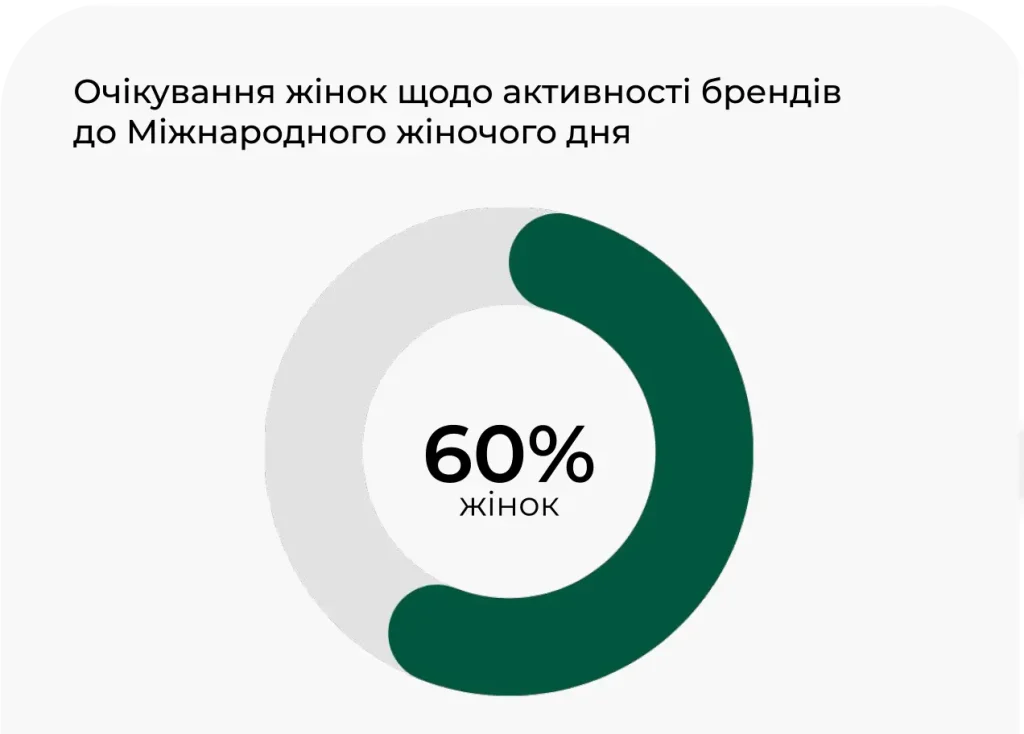
According to an Inweb study, 60% of women expect promotions from brands around March 8th. So there’s no need to drop them entirely — just try to find the right messaging and approach.
A survey of over 64,000 Ukrainian women, conducted by the official Rakuten Viber Ukraine channel, found that almost half of Ukrainian women don’t expect material gifts for March 8th: 24% expect nothing at all, 14% are counting only on verbal or written congratulations, and 13% named a donation to an important cause as the best possible greeting. Only a third of women still hope for gifts from loved ones, and only 15% expect congratulations at work or school.
Among the gifts Ukrainian women say they’d like to receive on March 8th, there isn’t much that’s material. According to Gradus, the breakdown is as follows: flowers (42%), attention (34%), a chance to take a break from household chores (31.8%), a romantic dinner at home (26%), a trip (25.9%), and jewelry (23%).
As you can see, there’s no mixer, frying pan, or vacuum cleaner on this list. So putting together a pink banner with discounts on home appliances isn’t a great idea. It would only reinforce the gender stereotype, creating the impression that the brand is simply trying to cash in on women by piggybacking on a historic holiday. And that’s not what March 8th is about at all.

Avoid formal, generic greetings
Audiences are looking for meaning. So don’t reduce your communication to formal greetings and pretty pictures alone. Remind people of the real significance of International Women’s Day — equality, respect, and women’s rights.
Show through your campaigns that women are diverse, and that their roles aren’t limited to traditional images. Tell the real stories of real women: colleagues, customers, volunteers, servicewomen. Let your communication make women feel seen and respected.
Be sensitive to the wartime context and lead with empathy
Because of the war, Ukrainian women have been forced to become even stronger, facing more challenges every day than before. In these conditions, audiences value sincerity and support.
According to surveys, 27% of Ukrainians explicitly expect empathy from brands, and 18% want to see brands lead by example on positive change. That’s why communication around March 8th should demonstrate an understanding of the real, everyday challenges women face during the war, along with genuine gratitude for their resilience.

Actions always matter more than words
If your budget allows, launch a meaningful special project for March 8th. This could be charitable support for organizations that help women (shelters for survivors, funds for servicewomen, educational projects for girls).
Then turn this into a case study by sharing your initiative publicly. For example, announce that a certain percentage of sales during the first half of March will go toward a specific initiative. As mentioned above, 13% of Ukrainian women said this would be the best possible gift — so a brand that takes this route stands to build real trust and goodwill, not just a one-off campaign moment.

Inspire women
Every day, from every direction, women are bombarded with reminders of how society wants them to be. How they should look, what role they should play in society, what they should work as, how they should feel about children and marriage. Don’t make communication that adds to that list.
Instead, remind women how amazing they are! That in today’s world, they can become anything. Be anyone. Achieve everything at once. Or achieve nothing at all, and just let themselves spend the weekend on the couch with a bag of chips.
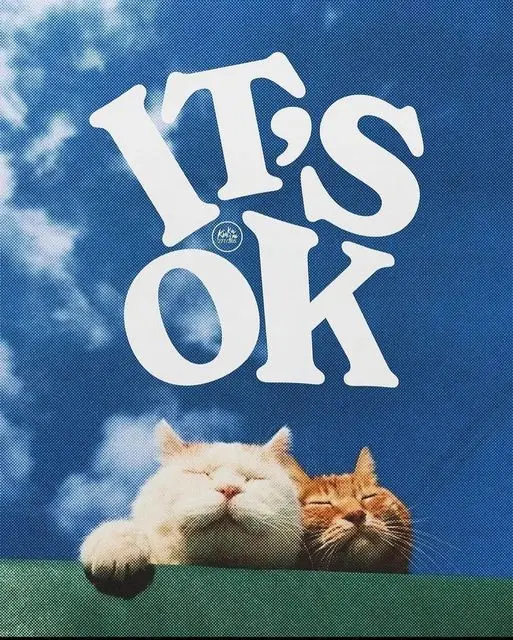
Let your brand be a reminder to women that it’s okay (and even necessary!) to exhale.
Do’s & Don’ts:
Don’ts:
- “spring holiday”
- “decoration of the team”
- “women’s day”
- pink discounts
- home appliances
- clichéd greeting cards
- stereotypical roles
Do’s:
- “you can do anything”
- “we’re with you”
- rights and equality
- diverse roles for women
- gratitude and empathy
- stories of real women
- everyday support
To sum up
Every year, Ukrainians move further away from treating March 8th as a “spring holiday,” remembering instead that this day is really about the fight for women’s rights. Brands that adapt faster can do more than just run a promo campaign flooding Ukrainian women with discounts — they can strengthen their audience’s emotional connection to the brand. And in the long run, that matters far more.
So please, communicate responsibly, inspire, and stand on the side of women — not just in words, but in actions too. That way, your brand won’t just avoid mistakes — it will also earn a reputation as modern and progressive.
And if you need help preparing your brand’s communication for March 8th — reach out to the Vivid team!
Marina Shalamova, Head of Strategy, and Maria Prykhodko, IM Strategist at digital agency VIVID, spoke exclusively to MMR about how Ukrainian media football shows what audiences really pay attention to — and how brands can use these insights for effective integrations ahead of the 2026 World Cup.
The year 2026 creates a unique context for brands: the World Cup, European tournaments, and the Nations League will generate record media interest. To understand where the audience’s real attention is focused, it is worth looking at Ukrainian media football — an ecosystem where working models of football content have already been formed.
What is media football — and why is it interesting for brands?
Media football is football teams created by bloggers, media personalities, and former players, where the main product is not only the match itself, but also the content surrounding it. Games, conflicts, behind-the-scenes footage, challenges, and players’ personal stories are turned into a continuous series on TikTok, Instagram, and YouTube.
The format emerged at the intersection of sports, blogging, and reality shows: the match is only part of the story here. Teams build not only sports results but also characters, drama, and viral moments.
That is why media football is becoming an alternative to classic sports integrations for brands. In this ecosystem, it is not advertising blocks that attract the audience’s attention, but participation in the content itself — in the plot, conflicts, or challenges.
Three approaches shaping the market
In media football, a “Big Three” has clearly emerged — players, each of which offers brands a different model of content, reach, and audience.
High-End Drama — UA Steel League
UA Steel League is building a league as a reality show.


Conflicts at press conferences, declarations of love on the field (6.4 million views), emotional breakdowns by commentators (over 900,000 views).
Brands can achieve real reach here, but only if the integration fits organically into the drama of the event. A banner against the backdrop of an emotional moment does not work. But a partnership that reinforces or is “present” within the plot does.
Algorithmic hacking — PROFAN
PROFAN has found its niche and focuses on TikTok algorithms to gain greater reach.

Their “Football Challenge” garnered 2.6 million views on TikTok and only 17,900 on Instagram.
Sketches, challenges, memes — everything is tailored for TikTok, which is why the same video can show a 150-fold difference across different platforms. For a brand, this is the fastest way to reach a young audience with a relatively low production budget. But it is important to understand that a new audience does not equal loyal fans.
Buddy Movie — Ignis FC
Ignis FC is a series about two old friends. The Milevsky–Aliyev duo works on nostalgia and human chemistry: viewers come for the characters, not the score on the scoreboard.


“Milevsky didn’t expect this from his friend.” — 424k on Instagram, 461k on TikTok. Rough play against Milevsky — 312k. Challenges with players — up to 655k.
For the brand, this means access to a warm, loyal fan base. But there is a caveat: the reputational context of the characters requires careful auditing before launch.
Related players: niche but strategically important
In addition to the “Big Three,” there are other players offering different formats.
Ruh Media Team has invented what is perhaps the cheapest way to achieve high engagement. Their “microphone on the field” format, where viewers can hear the players shouting during the game, consistently generates 168,000–243,000 views. The viewer does not rewind. For a brand, this is the ideal entry point: your logo is on the screen while the person is completely immersed in the content.
ARMAT FC demonstrates the most effective model in terms of ROI. One long video on YouTube (which in itself gets few views) is cut into 10–15 clips for TikTok and Instagram. One of these clips garnered 359,000 views. The referee’s dispute with Seleznyov garnered 304,000 views on Instagram. For the brand: one investment in filming = a month of content.
KONO.ECF is a cautionary case. The team relies on one person — Yevgeny Konoplyanka. His bullet gains 212,000 views, while the rest of the team’s content gains 2,000–3,000 views. If you are considering a partnership where all traffic depends on one person, factor this into your risk assessment.
What brands “buy” on each platform
Platforms are not distribution channels. They are different products with different audiences, different mechanics, and different attention prices. Our data shows how these differences work on each platform.
TikTok — scale.
The main source of new audiences. Even simple compilations consistently gather 50–500 thousand views. There is no “star filter” here — an unknown player with charisma can surpass a legend with a boring video. If your goal is recognition among teenagers and young adults, this is your priority.
Instagram — status.
The highest peaks in reach are recorded here, but they are tied to specific types of content: celebrities, conflicts, personal moments. Content featuring Konoplyanka, Milevsky, and Seleznyov often gets more views here than on TikTok. If you are building a premium brand and working with celebrities, this is your priority.
YouTube — a trap or an opportunity.
Most classic formats fail here: match reviews — 1–2 thousand views, interviews — less than 10 thousand, football debates — 300–900 views. Shorts copied from TikTok without adaptation — less than 1,000 (the same Ignis FC video — 892 on Shorts versus 461 thousand on TikTok). Viewers don’t want 15 minutes of mediocre football — they want 15 seconds of scandal.
But it’s too early to write off YouTube. Structurally, it’s the same logic as with television: the platform isn’t dying, the old format is dying.
Three formats that work:
- Reality vlogs — Ignis FC’s video
“Conquered the village | Lifted the cup” garnered 12,000 views (10 times more than the match review). Ruh Media Team base tour — 16,800 views.
- Shorts with celebrities — “Aliyev’s Top 5”(87,000 views), “Milevsky’s Version” (120,000 views). The only format on YouTube that can compete with Instagram.
-
YouTube as a production base — the ARMAT FC model. Long videos become raw material for 10–15 clips that gather hundreds of thousands of views on other platforms.
Conclusion for the budget: do not finance classic match reviews on YouTube. Finance reality vlogs, which are then cut into dozens of viral videos.
How to work with media football
Based on our research, we have formulated a checklist of five rules that separate a working partnership from a budget drain.
1.Define the format of cooperation and ask for a content plan
If your partner does not have an answer, your budget will go towards a one-off video with 2,000 views. Teams that shoot without an editorial plan cannot guarantee regularity or coverage. Before investing, make sure there is not just an “idea,” but a plan with formats, platforms, and predictable mechanics for distribution and audience engagement.
2. Look at media kits with real statistics, not top cases
One viral video against a backdrop of typical 2-3 thousand views is not an indicator. Ask: what percentage of content gets over 100 thousand views and on which platform? If the record result is an exception, your integration will most likely fall into the second group, not the first.
3. Choose a partner for a specific task
If you need to reach a young audience, go to PROFAN on TikTok. If you need status and association with names, go to UA Steel or Ignis FC on Instagram. If you want deep engagement and presence, go to Ruh Media Team with their “microphone on the field” format. Trying to buy “everything at once” from one partner usually means that you don’t get anything worthwhile.
4. Determine how your brand will be integrated
Ask if there is a place for the brand within the storyline: a product in the character’s hands, a mention in dialogue, a bow tie, mechanics associated with your name. The most valuable integration is the one that is not rewound. The least effective is the one that is there, but no one sees it.
5. Agree on KPIs before you start
Reach is the easiest number to manipulate. More important metrics are viewing time, number of shares, and substantive comments. If your partner is not ready to provide a detailed report, you are dealing with a team that is not yet ready for serious partnerships.
Don’t be a “commercial break”
Brands that come to media football with a “placement” mindset get a line in the credits. Brands that think like co-producers and ask the right questions before launch get content that the audience shares themselves.
The difference between 6.4 million views and 1,200 is not a statistical anomaly. It’s a new reality. And the advantage will go to those who understand what exactly they are paying for.
PR is no longer just about media relations. The PRCA has updated its definition of the industry
The Public Relations and Communications Association (PRCA) — Europe’s largest PR organization — has updated its official definition of public relations. This is not a formal edit. It is a recognition that the industry has long outgrown its old framework.
The new definition reads as follows:
Public relations is a strategic management discipline that builds trust, strengthens reputation, and helps leaders navigate complexity and uncertainty, delivering measurable outcomes: stakeholder confidence, long-term value creation, and commercial growth.
What is behind this — and why is it important for business?
Why the new definition came about
The old definitions mostly reduced PR to media relations: press releases, publications, media presence. But that hasn’t been the whole picture for a long time.
The PRCA has recognized that most existing definitions do not reflect what PR really is. Today, communication is inseparable from reputation management, stakeholder engagement, and strategic decisions at the company level. And information is disseminated not only through editorial offices, but also through algorithms. The old definition described the tools, but not the function.
From tactics to strategy
The most important shift in the new definition is that PR is moving from the tactical level to the management level.
Previously, the PR function often received a decision that had already been made and had to “present it correctly.” The new approach is different: a PR specialist is an advisor who participates in decision-making, helps assess risks, and builds trust before something goes wrong.
Simply put, PR is no longer a department that “deals with the press.” It is a function that influences how a company operates, not just how it looks.
Trust cannot be bought
One of the central principles of the new definition is the nature of trust.
Attention can be bought with advertising. Trust cannot. It is formed through consistent actions, honest communication, and independent confirmation from all participants in the process. People view paid messages through a filter of skepticism, and that’s normal — which is why a well-earned reputation is worth more than any media budget.
For businesses, this means that an advertising budget can provide reach, but it does not create authority. Authority is built over years — and that is what PR does.
Relationships are more important than publications
The new definition also changes the logic of evaluating results.
Press releases, publications, and media coverage are tools, not the ultimate goal. The real goal of PR is long-term relationships with investors, employees, partners, and customers. And success is measured not by the number of media appearances, but by how strong and mutually beneficial these relationships are.
This means that the approach to evaluating PR work must also change. Media monitoring is useful, but insufficient. Reputational stability and trust are the indicators that matter in the long term.
Complexity is the new normal
Geopolitical instability, misinformation, technological change, and social polarization are no longer exceptional situations, but rather the normal operating environment.
The new definition emphasizes that PR helps leaders act confidently in precisely these conditions. Not just reacting to crises, but anticipating risks and preparing for them in advance. This is what the definition refers to as “managing uncertainty.”
PR and artificial intelligence
A separate context captured by the new definition is the role of algorithms in the dissemination of information.
Today, what people read and see is largely determined not by editors, but by algorithms. This means that a PR strategy must take into account not only relationships with journalists, but also how artificial intelligence recommends content. Reputational presence in the information ecosystem is no longer just desirable, but necessary.
What this means in practice
For companies considering the role of PR in their work, the new definition sends several clear signals.
PR is an investment, not an expense. Reputation is built slowly and determines how easily a business attracts customers, partners, and capital.
PR should be part of the strategic process. Don’t just get ready-made solutions to “package,” but participate in their development.
The PRCA’s updated definition is not a terminological discussion, but a reflection of how the place of PR in business has changed. And for companies that take reputation seriously, it’s a good reason to rethink their approach.
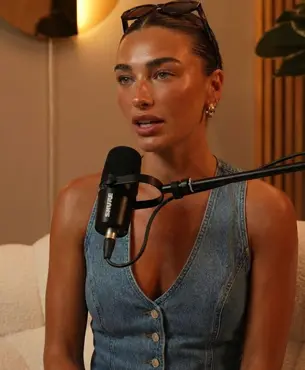
Imagine an influencer who’s never late for a shoot, speaks eight languages at once, never gets caught up in scandals — and delivers a 20x ROI for the brand. He doesn’t physically exist. But his results are entirely real. Virtual influencers are one of the fastest-growing segments of marketing. Instead of theory, we’ve put together six cases where digital characters are already working for brands.

Six cases worth knowing

Hyundai × Kenza Layli: eight languages, one influencer
To launch the Hyundai Kona in Morocco, the agency Pixel.ai created the virtual influencer Kenza Layli. The key innovation: Kenza worked not only as the face of the campaign on YouTube and social media, but also as an interactive chatbot, advising potential buyers in eight languages simultaneously.
Result: 20x ROI. 2,000+ simultaneous chat conversations. The most successful influencer product launch in the brand’s history.
H&M × Kuki: when an AI influencer is more memorable than an ad
H&M brought in the virtual influencer Kuki to promote its Innovation Metaverse Design Story collection in the US. The mix combined video plus AI-influencer content vs. standard video advertising.
Result: 11x ad recall compared to campaigns using traditional video alone.


Lil Miquela × Prada, Calvin Klein, NMDP: the world’s most famous “robot”
Created in 2016, Lil Miquela is the benchmark for virtual influencing. 2.6 million followers, over 90 brand collaborations in a year. The Prada campaign drove significantly higher engagement compared to the brand’s regular posts. In 2025, Miquela launched a campaign with the National Marrow Donor Program — telling a first-person story about a leukemia diagnosis. A virtual character — and a real social impact.

Mia Zelu × Wimbledon 2025: 165,000 followers for something that never happened
The AI influencer posted photos “from the front row” at Wimbledon. One post — 50,000 likes. Celebrities commented. Cricketer Rishabh Pant liked it — then deleted his like once he learned the truth. Because Mia was never at Wimbledon. She doesn’t exist at all. When this came to light, the scandal only boosted her reach further.
Result: 165,000 followers gained within a few days. A textbook example of event-jacking — and a case study in the transparency debate.
Aitana López: $10,000/month and a date no one can actually go on
Rubén Cruz from Barcelona created the pink-haired AI model because he’d grown tired of working with real-life influencers. A team of 10 people plans her content every week. On one occasion, a well-known actor DM’d Aitana — not realizing she doesn’t exist. In late 2025, WooHoo (Dubai) brought Aitana on for a New Year’s campaign: 105,000+ views and 1,300+ interactions across three posts.


O2 × Daisy: the AI grandma who trolls scammers
British telecom operator O2 created an AI “grandma” named Daisy, who answers calls from phone scammers and wastes their time. The campaign won multiple awards and became a benchmark example of a branded virtual influencer — a case where a digital character solves a concrete business problem.
Five opportunities for your brand
1. Brand-page ambassador
A virtual character runs your social media every single day — reviews, unboxings, tips, lifestyle content. No dependency on the schedules, moods, or fees of live creators.
2. A face that sells
An AI influencer simultaneously publishes content and advises customers as a chatbot — answering questions, recommending products, guiding them toward a purchase. In any language, 24/7.
3. Talent for promo
Videos, banners, stories, product content — no studio, no travel, no limitations. One character, unlimited shoots in any look and any location.
4. Real-time marketing
Your AI ambassador reacts instantly to trends, creating content in real time — while competitors are still finalizing a brief with a live influencer.
5. A character built for a specific business need
Not just content — an AI influencer can educate, protect, support. Onboarding new customers, an FAQ bot with personality — any function, wrapped in a character.
⚠ What’s important to understand at the start
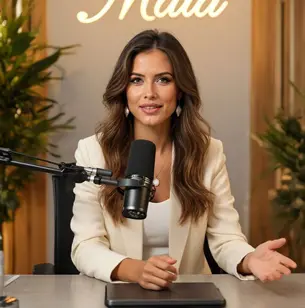
Like any new tool, AI influencers work best when a brand approaches them strategically. Audiences value transparency — so an honest “this is our digital ambassador” stance is always better than trying to pass off an AI as a real person. Creating a quality character is the job of a production team of designers, scriptwriters, and strategists — it’s a full-fledged creative product, not just a prompt. Brands that understand this get the best results.
What this means for your brands
Most of the cases you just read about are brands that were the first to try this. Hyundai didn’t wait for the entire auto industry to switch to AI influencers. H&M didn’t wait for market consensus. They tested it — and got results that traditional formats couldn’t deliver. The Ukrainian market is still in the early-observation stage. This is a window of opportunity for those ready to become a first mover.
IAB forecasts that by the end of 2026, roughly 40% of online advertising will include elements of generative AI. The future is hybrid. Want to discuss how this could work for your brand? We’re ready.
What’s happening?
Instagram (Meta) continues to actively update its algorithmic systems. In March–April 2026, the platform made a series of key changes that directly affect post reach, the effectiveness of paid partnerships with influencers, and approaches to content creation. In this digest — the most important things you need to know.
What has changed in the algorithms
1. Prioritizing “shareability” > “likes”
Instagram has shifted its focus even further away from likes toward:
- shares
- saves
- time spent engaging with content
The algorithm now evaluates: “would people want to show this to others?” rather than simply “did they like it?”
2. Reels = the primary distribution format (but filtered for quality)
Reels still deliver the most reach. However, the algorithm now filters out “weak content” (repetitive posts, templates, low retention) more strictly.
Important: not all Reels “take off” anymore — only those that hold attention within the first 2–5 seconds.


3. The first frame and hook have become critical
Instagram has explicitly highlighted that the first seconds of a video determine whether the content gets pushed into recommendations.
If a user isn’t “hooked” right away, the algorithm cuts off distribution in the recommendations feed.
4. Reduced weight for “overtly promotional” content
Content that comes across as:
- obvious advertising
- a direct sales pitch
- a “scripted integration video”
now receives less and less organic reach.
5. Priority for “native storytelling”
The algorithm now ranks more favorably:
- content that looks like a natural part of a creator’s life
- integrations without an overtly “salesy tone”

What this means for influencer campaigns:
- Simple “product integration” no longer works
- The classic format — “here’s the product → here are the benefits → buy now” — will see reach drop off
- The creator is a co-producer, not just a placement slot for ads
- The updated algorithm effectively pushes brands to give creators more creative freedom instead of forcing them into a rigid format
- It’s precisely the creator’s own organic style that gets through the algorithmic filter
How to adapt campaigns (practical recommendations)
Build the script around the hook, not the product
NO: “let’s integrate the product into the video”
YES: “let’s create a video people actually want to watch → then integrate the product”
A strong hook = 50% of a reel’s success


Build a “share trigger” into the creative
The content should evoke reactions like:
- “I’m sending this to my friend”
- “this is so me”
- “I’m saving this”
Less control — more native
Recommendation:
- minimize rigid briefs
- avoid rewriting the creator’s own text
- ! Better to provide a framework + key messages instead

A mix of formats: Reels + Stories + UGC logic
- Reels → reach
- Stories → follow-up and conversion
- UGC-style → trust
Focus on retention
Essential elements:
- dynamic editing pace
- frequent shot/frame changes
- intrigue right from the start

Key takeaway
In 2026, Instagram’s algorithms are effectively “filtering out” standard advertising content that isn’t interesting in its own right.
Campaigns win when:
content = entertainment / value
the brand = an organic part of the story
the creator = an author, not just someone executing a brief